Sometimes, I wonder “WWFD?”
Here’s a collection of ideas and resources for scientific programming.
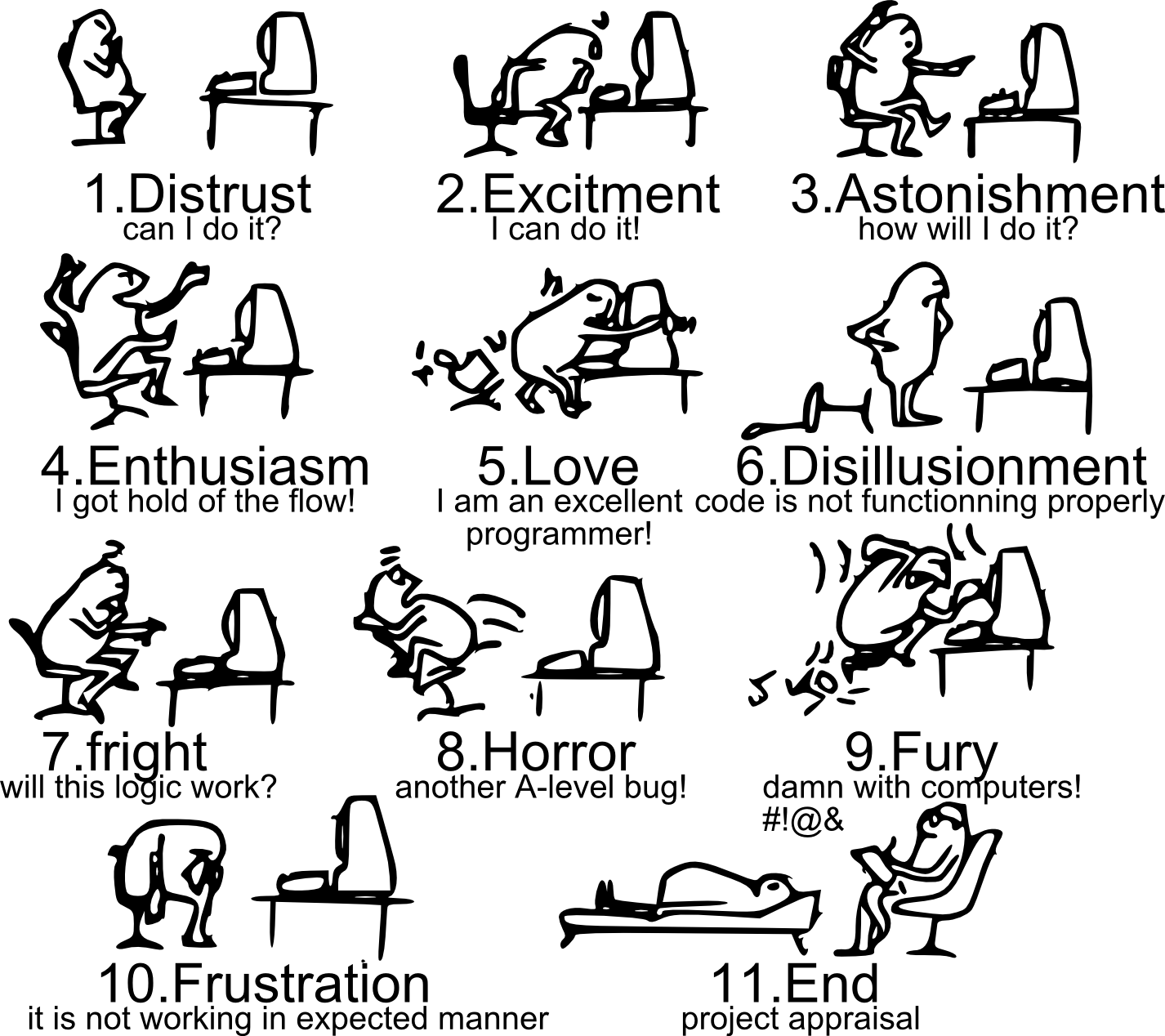
Steps in programming…
Sometimes, I wonder “WWFD?”
Here’s a collection of ideas and resources for scientific programming.
Steps in programming…
Sometimes, when trying something new in optics, it is very hard to know where to begin, and find knowledgeable source. I want to share a small collection of resources that I had found immensely useful.
“Basic Lab Skills” by Steve Cundiff (pdf) is a short must-read for every experimental optician.
“Rule of thumb in Opto-Mechanics” by Katie Schwterz (pdf) is also very good to have a sense of what can be done with an experiment.
refractiveindex.info is a great ressource to know the refractive index of many materials.
The Encyclopedia for Photonics and Laser Technology, maintained by Rudiger Paschotta is an excellent ressource, and very knowledgeable about ultra-fast optics
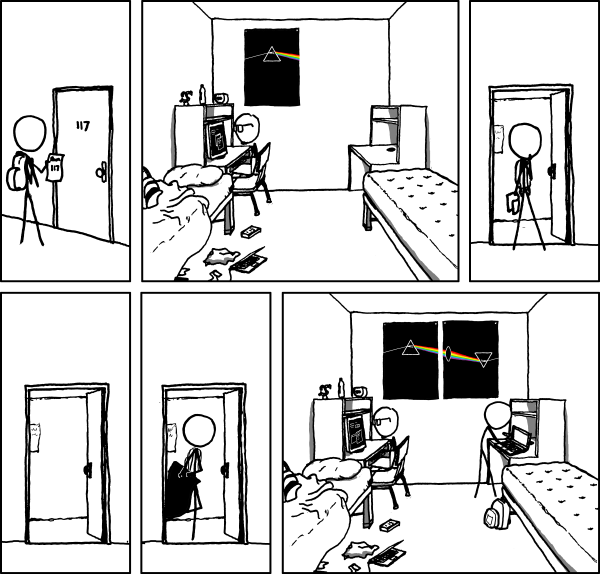
I want to talk today about Hooktheory, a website/ebook that two of my colleagues at CXRO Chris and Ryan have founded and are currently developing.

They gave me the chance to visit the Berkeley Skydeck, a startup incubator where they share space with other innovative companies on the top floor of the Chase building, in Berkeley– a great view !
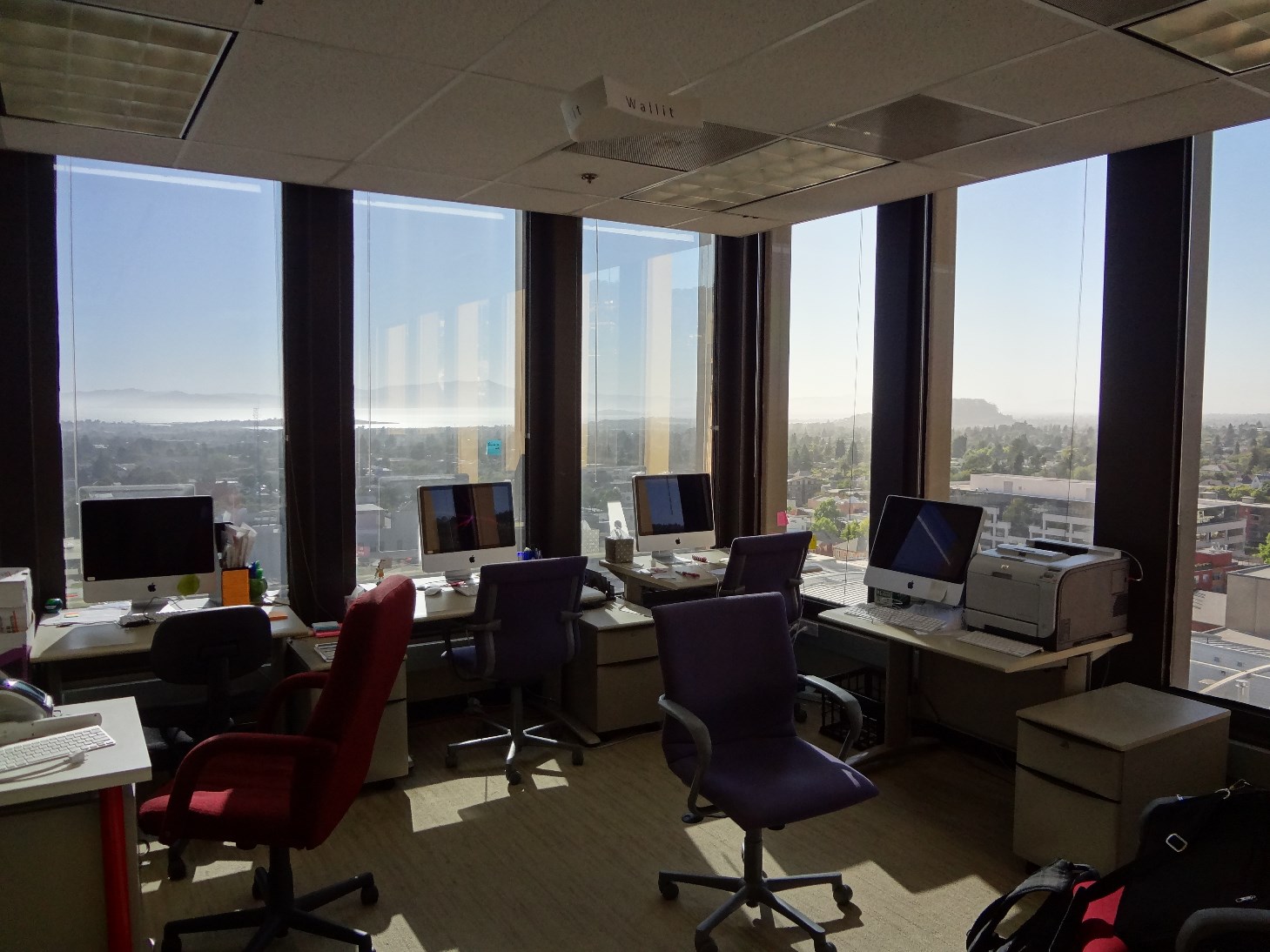
West view from the Berkeley Skydeck– located on the top floor of the Chase Building in Berkeley
En ligne avec le prédent post, je voulais vous faire part d’un élément étrange des droits de l’homme.
En lisant “I have a dream” de Martin Luther King Jr, il fait référence a l’élément suivant :we hold these truths to be self-evident that all men are created equal
qui est un extrait fameux de la constitution americaine.
Tentant de traduire cela en francais, j’ai comme eu l’impression qu’il manquait un mot…
Article 1er de la declaration de droits de l’homme et du citoyen (1789)
Bon, j’ai décidé d’ecrire un post en francais histoire de contenter mon travers (tres francais) de raleur compulsif, et on va parler de ce qui ne va pas aux Etats-Unis, a savoir (entre autre) le systeme imperial, la sacralisation des textes, le crédit, le systeme de santé et les inegalités.
Le syteme impérial n’est pas a vrai dire ce qu’il y a de pire ici, mais c’est quand meme un sacré pain in the butt.D’une part, les Etat-Unis sont un des seuls pays a utiliser ce systeme :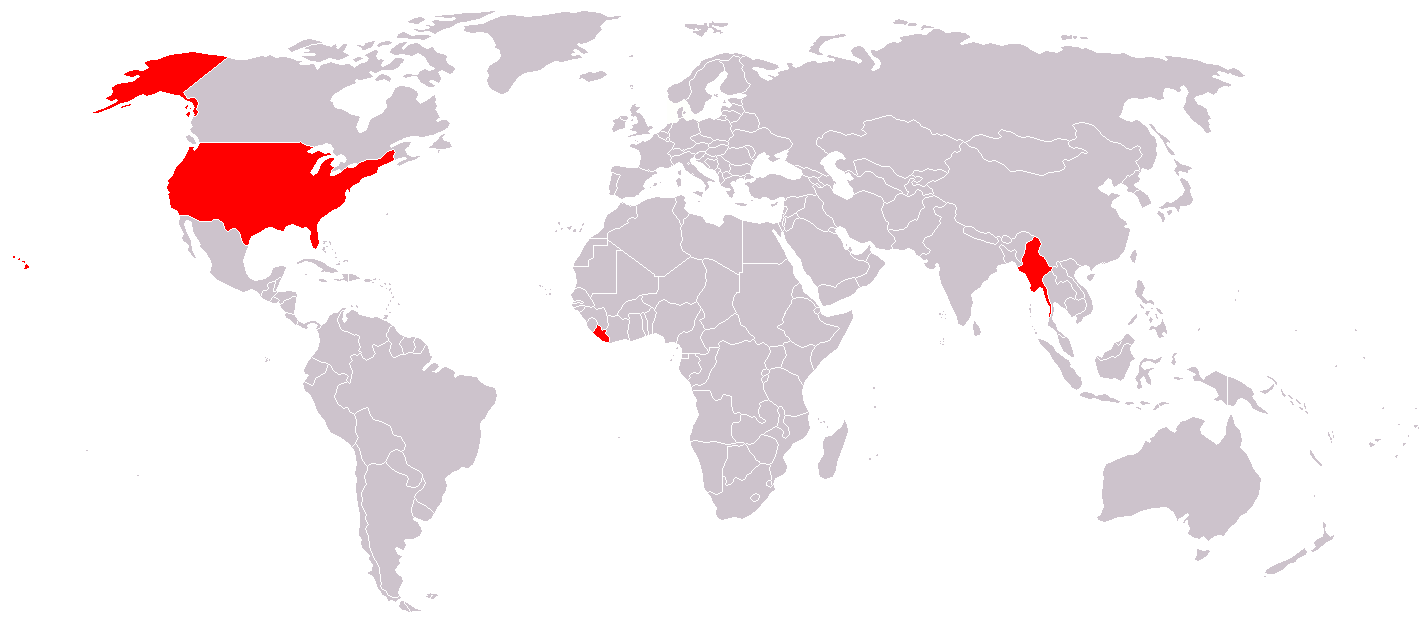
Map of countries officially not using the metric system
Ce systeme n’est pas tres efficace par ailleurs, lorsqu’il s’agit de relier des quantités :

Imperial system vs SI
… meme si certains voient un sens caché entre ces quantités…
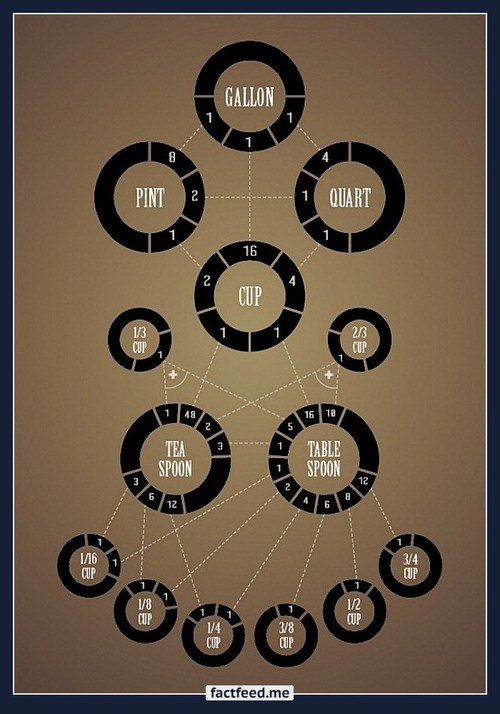
Imperial system is all about (il)logical ratios
En fait, le principal probleme, c’est quand on a tout en metrique (des vis, des clefs Allen) qui rentrent mais pas vraiment dans les trous faits pour…
Continue readingYesterday, I went to a talk given at LBNL by Bruce Alberts on “Science and World’s Future“.
It was an interesting retrospective of the work done by Bruce Alberts all along his career, focused on public outreach (for those who do not know, he was the Editor-in-Chief of Science journal, the president of the US National Academy of Science for 12 years and the author of the bible in Molecular Cell Biology).He explained his efforts in introducing “critical thinking” education in US schools, and gave some examples which I found very interesting, since I interested in science public outreach myself
Bruce Alberts’s drawing
He was a obviously a good candidate for a drawing ! He is not a Nobel prize himself, but he was definitely a Nobel prize maker…
I’ve asked him to draw me a torch, since he ended his talk with a quote of Louis Pasteur :
Science knows no country, because knowledge belongs to humanity, and is the torch which illuminates the world.
It’s fun the he also quotes Pasteur, like Richard Hamming who quoted the pseudo-Randian :
Chance favors only the prepared mind.
Now that in Berkeley, I really need to get a drawing from George Smoot (building 50-5007, he was in the thesis committee of a friend of mine), Saul Perlmutter (building 50-5038; his daughter is the friend a of colleague;-) , the previous director of the lab and former Secretary of Energy Steven Chu, the current director of the lab Paul Alivisatos (a Nobel-Prize-to-be ?), and maybe catch-up with Charles Townes, who’s old an often seen at the church in Berkeley, who was the first person I ever asked to draw me something and the only person who ever refused….
Recently, following the logic of the wonderful what-if.xkcd I asked myself this very interesting question :
Considering that when I leave Paris at 12am and land in St. Maarten at 3pm the same day, where in the world can you land at the same hour you took off if you were following the longitude ?
The answer is pretty straightforward : considering that a plane has speed of 1000km/h and that the angular speed of the earth is 261mrad/h (360°/24h, or 1650km/h at the equator), considering that the altitude is negligible compared to the diameter of the Earth and having a cosθ correction for the latitude, the corresponding latitude is 52.7°, which is the latitude of Warsaw, Berlin, Amsterdam or Edmonton (Canada).
Of course, that would be very easy to check… the problem is that there are not a lot of direct of flights between Berlin and Edmonton. And since there is no time difference between these European cities, the times flies during the flight. However, if we take Amsterdam and Vancouver, we can compare the result (there is a 9h time difference between the two cities which are approximately on the same latitude) and validate our approximations : Would that mean that if you fly at a higher latitude, you can actually go back in time ? Continue reading
The views from the balcony of my new lab are stunning !

Berkeley, its Campanile and a view of SF, seen from Lawrence Berkeley National Laboratory
I’ve made a series of FDTD simulations of optical phenomena using Meep.
I did these this during my thesis, to better understand some not-so-intuitive interaction of light and matter.There are more to come later !Enjoy!(il s’agit d’une archive que j’ai retrouvée, et je trouve tout à fait dans l’esprit de what-if xkcd.)
Par l’absurde, supposons que le Père Noël existe vraiment.
Il y a approximativement deux milliards d’enfants de moins de 18 ans