Category Archives: science life

Crisper

The other day, I had the chance to stumble on Jennifer Doudna in Stanley Hall… And I asked her for a drawing !
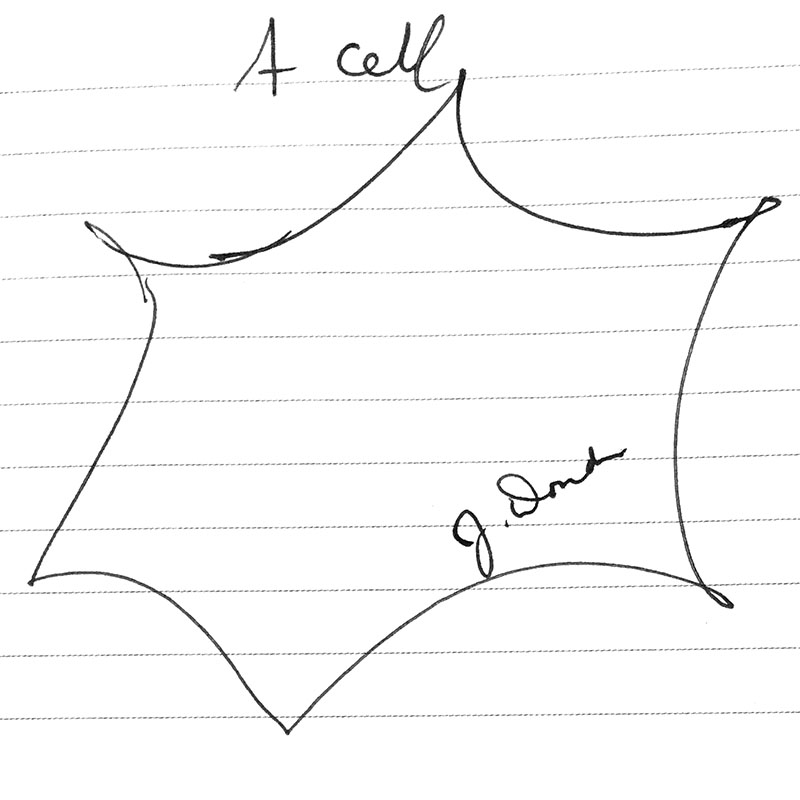
Jennifer Doudna's drawing

Jennifer Doudna’s drawing

Jennifer Doudna is well-known for her discovery, with her postdoc Martin Jinek and Emmauelle Charpentier, of the CRISPR-Cas9 technology, that allows live gene editing.

It might not seem that crazy, but it’s a total game changer (Radiolab had a good story about it recently). The thing is that until now, to modify the genes, one had to change the germ cell and create a new living being : an already existing being could not have its DNA reprogrammed. But now, you can cure genetic diseases and target specific genes that you would like to change (I don’t know if you can change the colors of your eyes by that process, but who really cares ?)

This of course brings a lot of ethical questions that they try to tackle— I can’t help but to  imagine how terrible a biological weapon targeting a population through specific would be.

For her work, DouDNA and Charpentier were awarded the Breakthrough Prize in Life Science, a prestigious prize put together by Yuri Milner and others. She will probably be promoted to my Nobel Prize list soon:)

edit November 10th :

No Nobel Prize this year, but another Breakthrough prize, from optogenetics !
Watch the related Breakthrough Symposium talks
And another piece in the New Yor Times : the CRISPR quandary.

Fun to imagine

I’ve received this very kind email, related to a transcript I’ve made a while back :

Dear Antoine Wojdyla,

By chance I have just come across your excellent English transcript of the Richard Feynman ‘Fun to Imagine’ episodes and I thought how wonderful it is that you have gone to the trouble of doing this. I produced the programmes back in 1983 and it’s great that they are still out there and people seem to enjoy them.
Anyway, I thought I’d write and say thank you!

Best wishes,

Christopher Sykes

nice_treeHere’s an excerpt from the transcript “fun to imagine“:

The sun is shining, and this sunlight comes down and knocks this oxygen away from the carbon, so it takes some light to get the plant to work! And so the sun, all the time, is doing the work of separating the oxygen away from the carbon, the oxygen is sort a of terrible by-product, which it spits back into the air, an leave in the carbon and water to make the substance of the tree. And then we take the substance of the tree to get the fireplace. All the oxygen made by these trees and all the carbons would much prefer to be together again. And once you let the heat to get it started, it continues and make an awful lot of activity while it’s going back together again, and all those nice light and everything comes out, and everything is being undone, you’re going from carbon and oxygen back to carbon dioxide, and the light and heat that’s coming out is the light and heat of the sun that went in, so it’s sort of stored sun that is coming out when you burn it.

Seeing small

I don’t know how to do this on a small scale in a practical way, but I do know that computing machines are very large; they fill rooms. Why can’t we make them very small, make them of little wires, little elements – and by little, I mean little. For instance, the wires should be 10 or 100 atoms in diameter, and the circuits should be a few thousand angstroms across.
– Richard Feynman (1959)

Being  a researcher, all my friends and family have very little idea of what I’m work on. The trouble is that when I try to explain, I need to resort to notions such as wavelength or transistor, only to discover that most people have no clue of what this is, expect to joke about being on the same… wavelength. But very small wavelength.

To put it straight : I look at small things.

Yet, I was just awarded a prize for best research at the EUV lithography symposium in Washington, D.C., and it’s only fair of me to explain what I’m doing for a living!

sharp_photo

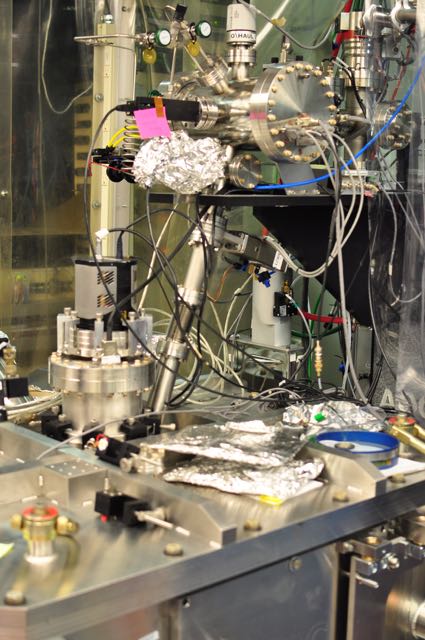
The SHARP EUV microscope I’m working with


Continue reading

Beautiful SEM pictures

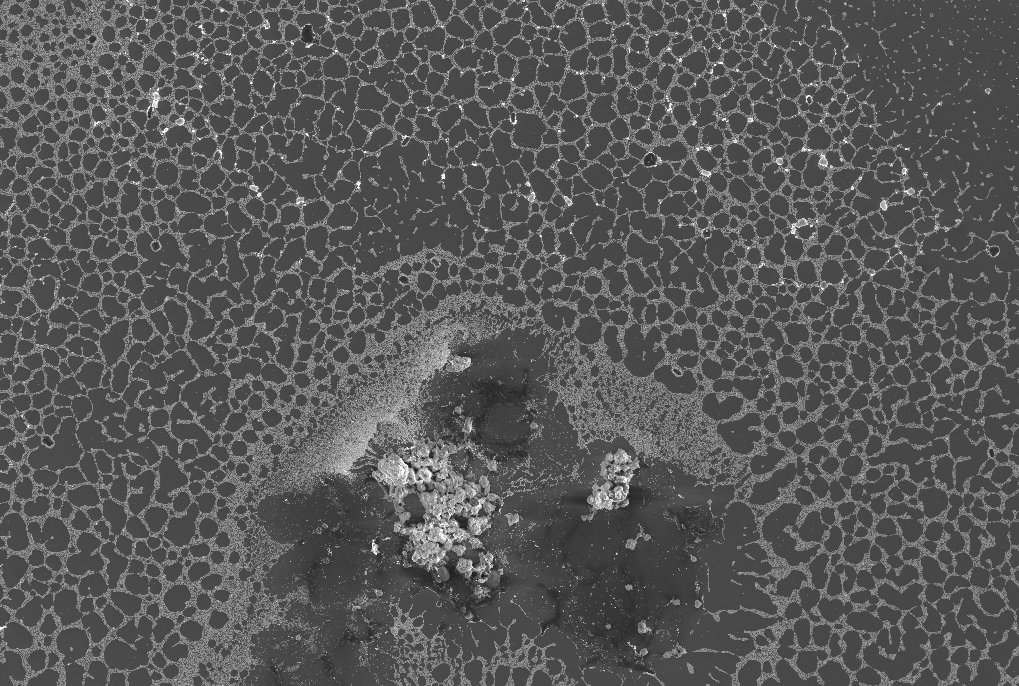
I had the chance to help my friend Sylvie to get scanning electron microscope pictures of the MRI contrast agent she synthesizes, and we collected gorgeous data thanks to my colleague Farhad.
He told me that he had TONS of failed experiments that still yielded great pictures…
We should start a journal of the failed experiments… art+science mag !:)

Islands...

SEM picture that looks like an aerial view of Dog Island (Anguilla)…

I guess there is some wabi-sabi in science…

Continue reading

Love and Confidence in science

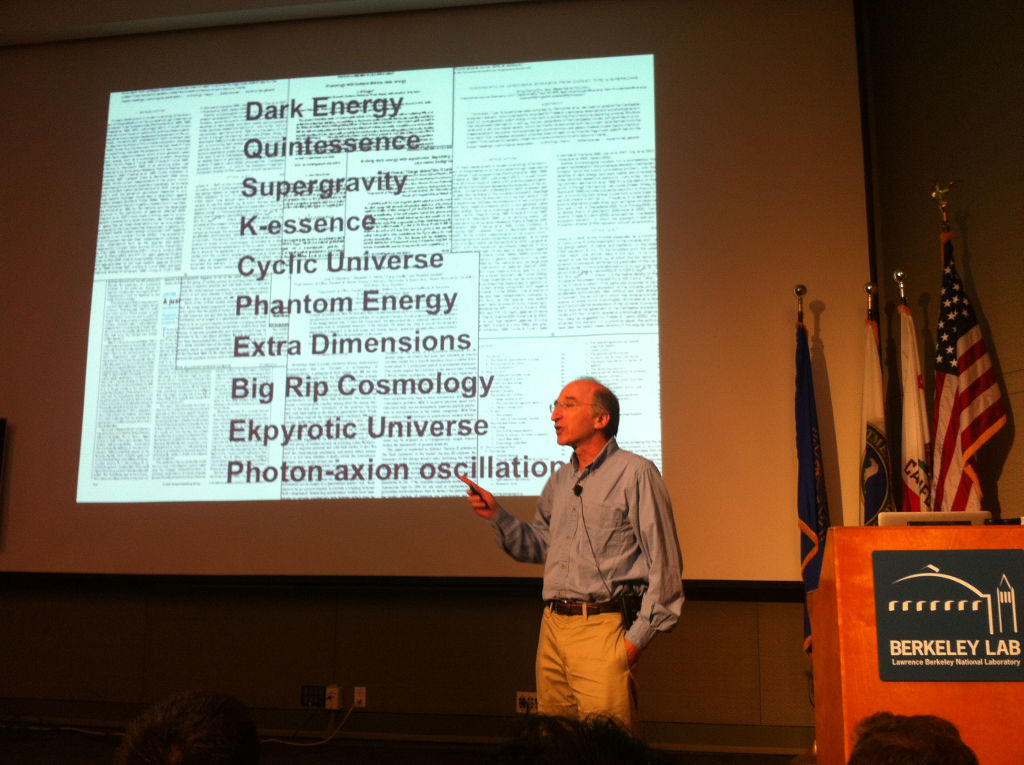
Recent events in the scienfic community – I’m thinking of the detection of primordial B-mode signal in the CMB polarization by BICEP2 (probable), the discovery of Higgs Boson (Nobel-prized) and of the faster-than-light neutrinos (ruled out as an experimental error) – invite us to draw a line between what is reasonable science and what is not.

Saul Perlmutter talking about exotic theories in astrophysics

Saul Perlmutter talking about exotic theories in astrophysics

Continue reading

Three algorithms

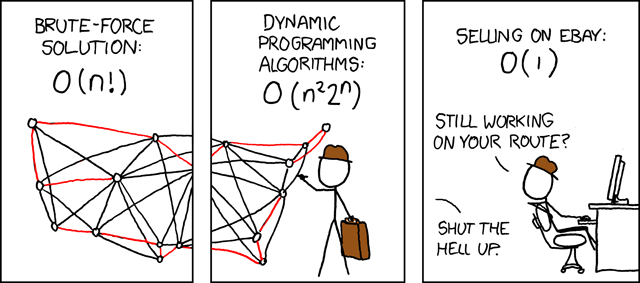
Here are three algorithms that I found pretty funny, and that make you think, while I was trying to find elegant solutions to some problem I faced.

Continue reading

Strawberry fields forever

Today, I was lucky enough to go to the screening of “How I Came to Hate Maths” in Berkeley, where I had the occasion to ask Jean-Pierre Bourguigon and Cedric Villani for a drawing.

Here’s what came out of it.

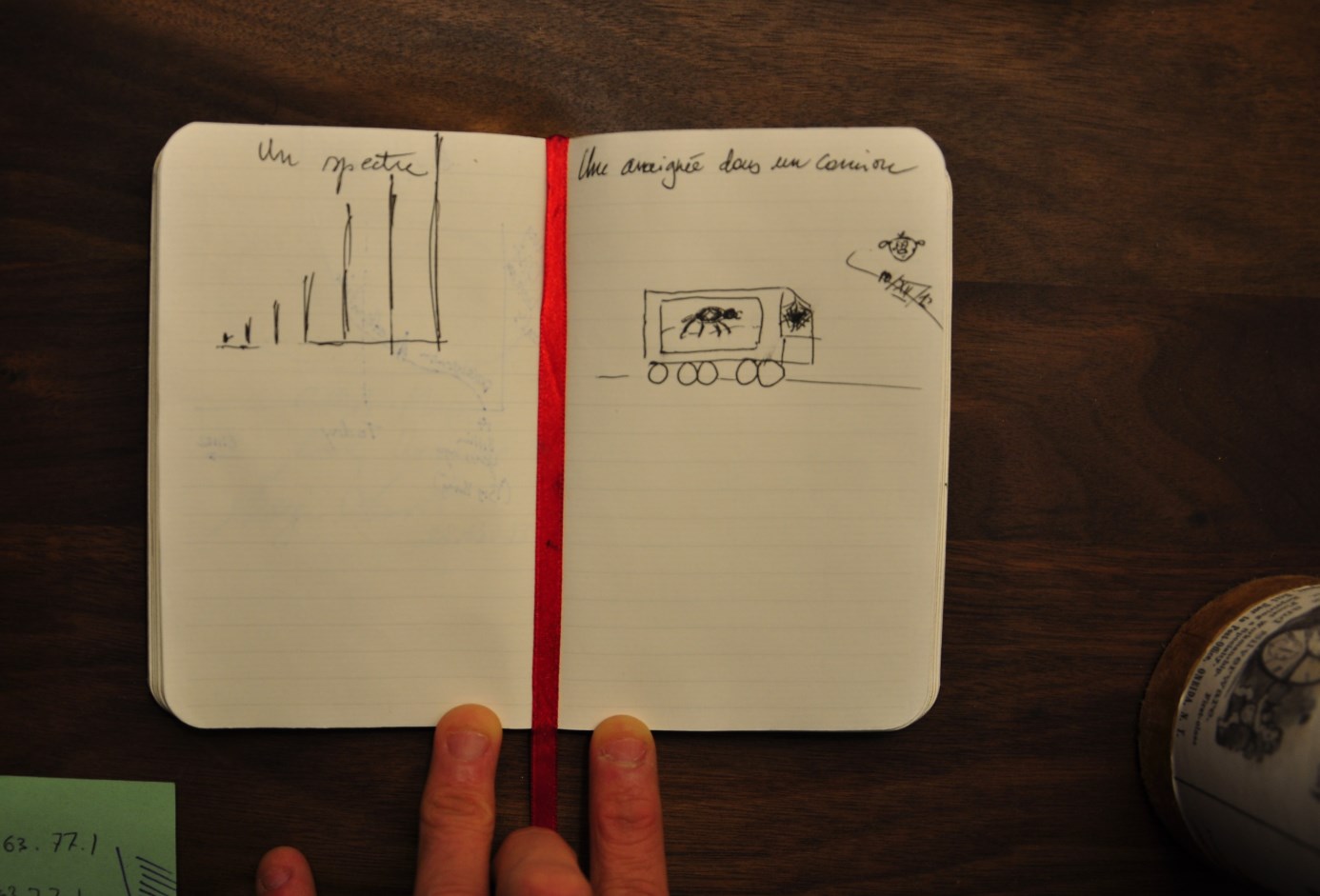
First, I asked Cedric for a drawing of a spider in a truck, for he his well known for his work on optimal transport, and because he has the habit of wearing a spider broach. He added his signature, a marsupilami– not bad for a Fields medal recipient !

Then, I asked Jean-Pierre to draw me a spectrum, since it is, to me, what relates physics and mathematics the most

A spectrum, by Jean-Pierre Bourguigon and a spider in a truck by Cedric Villani

A spectrum, by Jean-Pierre Bourguigon and a spider in a truck by Cedric Villani

Continue reading

Tagged , , , , , , , , ,

Experimenting espresso coffee on American scientists

In the beginning of this year, I brought an espresso machine to my lab, since they only had drip coffee.
Drip coffee is good, and probably enough to keep you alert, but I missed the conviviality of sharing coffee with other people, especially people form other department- I owe to R. Hamming the habit of pollinating one’s mind with ideas from other. Plus, I soon discovered that American researchers don’t “waste” time having lunch with each other, which is pretty sad and, to me, opposed to the idea of research; I remember, back in Paris, how many times new ideas came up by talking about mundane matters to other researchers.

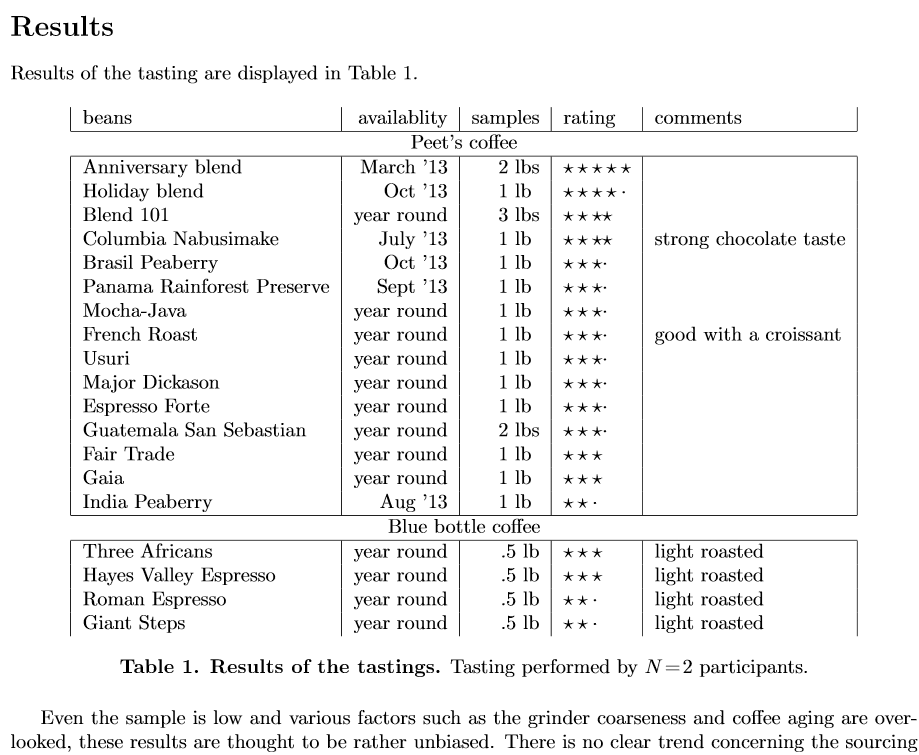
The conclusions of this initiative are available here.

Here’s an excerpt about coffee tasting :

Peet's Coffee tasting

Peet’s Coffee tasting

Enjoy your coffee !


(edit Dec 20th 2013) : Here’s a nice article by Matt Goudling on Japanese tradition blended with the art of making coffee : Daibo dreamed of coffee.

Two+Six Views of Lawrence Berkeley National Laboratory

The views from the balcony of my new lab are stunning !

Berkeley, its Campanile and a view of SF, seen from Lawrence Berkeley National Laboratory

Berkeley, its Campanile and a view of SF, seen from Lawrence Berkeley National Laboratory

Continue reading

Sci-Hub.org blocked in the United States – and solution

I recently arrived in the United States, and while I was try to get a scientific article, I realized that sci-hub.org was blocked in the United States. It eventually redirect to myescience, a poor science forum.

For those who don’t know, sci-hub is a russian website that allows to get access to many scientific journals (you must not download…), through tunneled access of big institutions. I mean, this is FREE SCIENCE!

That is, US citizen might not even know this website – there is also a great firewall in the USA! The solution is to use a non-US based proxy, that will allow you to get access to sci-hub. The trick is that not all of them support the website script. I found one proxy that works for me :
http://bestukproxy.co.uk/surf.aspx?dec=1&url=uh4QwdELmT09u5RExqiKvTjDB6X!

The only thing, is that you cannot download the articles directly by hitting the link (which is encrypted).
You must click the link – then the pdf won’t load, but you can still get the the uncrypted link. Then, you can feed the proxy with this link and ‘hurra you’re done !


Tagged , ,